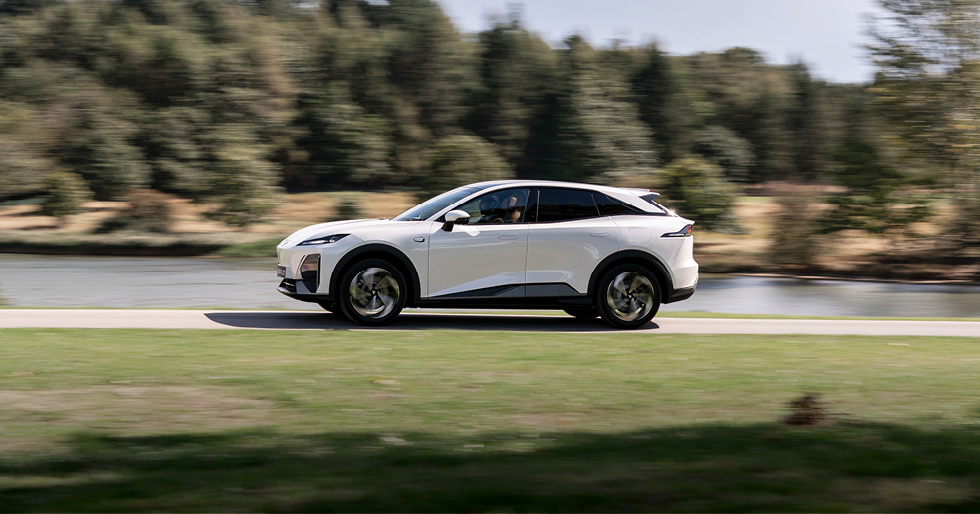
What To Look For In A Mid-Size Electric SUV In Australia Looking for an electric car? Here DEEPAL explores what to look for in a mid-size SUV in Australia.
Why mid-size EV SUVs are gaining traction with Australian drivers The demand for mid-size electric SUVs in Australia has been trending up steadily year-on-year. It’s no surprise that the cost of running a petrol vehicle, and the introduction of more competitively priced electric options, are driving this demand.
Plus the Australian love affair with rooftop solar power means savvy drivers are recognising the potential to charge their electric vehicle at home with free power from the sun. Apart from future-proofing their budgets, more people are also looking to electric SUV’s as a way to reduce their environmental emissions.
Looking for an electric SUV? Think about how you want to use it Before you start your search for an electric mid-size SUV, there are a number of important things to consider. Taking a look at your daily and weekly driving habits will help you assess features that are important to you. If you have a long daily commute the range you can travel on a single charge will be important. An SUV such as the DEEPAL S07 , can keep you moving with up to 475km of range1 on a single charge.
Also consider where you drive to and park – will you have easy access to charging points? The type of driving you do, such as highway driving at higher speeds, can also impact on your range and SUV choice. Some electric SUVs, like the DEEPAL S07, feature regenerative braking which feeds energy back into the battery to extend driving range.
Your lifestyle will impact on the driving you do too. Is your electric SUV mainly for the daily school run? And short urban trips? Or do you want a longer electric range for regular weekend adventures – with towing capacity to haul the boat to the coast? Think through all of the potential driving scenarios, so you’re ready to go where you want, when you want.
For real range figures, look beyond the brochure numbers Firstly, the range of an electric SUV is simply how far the vehicle can travel on a single charge. But when assessing range, it pays to do your homework and to look beyond the marketing semantics. The WLTP (World harmonised Light vehicle Testing Procedure) figure quoted by manufacturers is based on real-world range, unlike some systems used in the past. However, electric range can vary in different driving conditions. This is because a myriad of factors influence energy usage, as with all fuel types. These factors include how you drive, your speed, the weather including temperature, the type of terrain you are covering (mountainous or flat) and the state of your battery.
The good news is that electric SUV range has improved in leaps and bounds in just the past few years. So expect to find an SUV range that easily caters to an average families’ activities for a number of days in Australian driving conditions, before needing a top up.
Charging At Home and On The Road Your electric SUV charging options are an important consideration. For many people having the convenience of home charging will depend on whether they have a standalone house, apartment charging facilities or a street charging station close by. Depending on your daily SUV use, charge at home using a standard power point can be a viable option. This is a Level 1 charger which is great for slow charging overnight, without the need for a special facility.
For fast, Level 2 charging you’ll need a professionally installed EV charging station to charge from the power grid or your solar battery (special cables required). This enables faster charging and top-ups, but be aware that fast charging cables are often sold separately.
Outside the home there’s a rapidly growing public charging network. Level 2 chargers are generally located at shopping centres, workplaces and in apartment complexes. Level 3 super-chargers are usually found in locations such as service stations, which will often have multiple dedicated charging bays. These chargers can potentially add over 300km of range in less than 15 minutes2 . Plus there’s a number of great Apps to help you find dedicated EV charging stations on the road.
All-important Interior Space And Family Practicality Electric SUVs benefit from a number of design advantages. With no bulky internal combustion engine, transmission tunnel or exhaust system, electric SUV cabins are often larger with a flat floor for enhanced rear seat space and legroom. With the electric battery usually placed under the SUV floor, designs can incorporate more family comfort features and versatile storage options for all passengers.
The electric motor design can also mean larger and more spacious boots and sometimes even a front trunk (or frunk) too! For example, the DEEPAL S07 has a 445L trunk, big enough for a twin pram, plus 1385 litres of room with the rear seats folded down – and a 125L frunk.
Safety, Driver Assistance and ANCAP Considerations Boasting dynamic safety systems, many electric SUVs are among the safest cars on the road. However, do your research as safety features vary from brand to brand. A good place to start is to look at the official ANCAP rating, determined by the region’s leading vehicle safety authority. For example, the DEEPAL S07 SUV achieved a 5 star ANCAP rating, with an “Adult Occupant Protection” score of 95% (rating assessed December 2024, applicable to vehicles manufactured from November 2024).^
To find an electric SUV that’s well-equipped in the safety stakes look for a suite of active and passive safety systems – including Autonomous Emergency Braking with pedestrian and cyclist detection, Lane Keep Assist, Emergency Lane Keep, Lane Change Assist and Lane Departure Warning. The latest tech and driver assistance support should also be part of the package, with electric SUV’s like the DEEPAL S07 offering an advanced Driver Monitoring System, 360-degree view monitor, Rear Cross Traffic Alert and Brake, Blind Spot Detection, Traffic Sign Recognition and Speed Limit Intelligence.
^The Australasian New Car Assessment Program (ANCAP) gives consumers consistent information on the level of occupant protection provided by vehicles in serious front and side crashes.
In-Car Technology for Everyday Usability Electric mid-size SUVs are loaded with all of the information technology, connectivity and smart features you could ever want. From large high-resolution information touchscreens, to digital driver displays, wireless Android Auto™ and Apple CarPlay® connectivity3 , and wireless charging3 . Features and availability may vary by model and variant.
Apart from a dynamic tilt-adjustable 15.6” screen and a premium sound system with 14 Sony® speakers, the DEEPAL S07 introduces an augmented reality head-up display which projects critical information, including speed and navigation directions, onto the windshield to enhance the driving dynamics.
Creature comforts are as premium as you’d expect, so look for top-end features such as heated and ventilated front seats, dual zone climate control, multiple USB charging points, integrated dashcam and sound-insulating glass for the driver and passenger front windows.
Ownership Costs Beyond The Purchase Price So what’s it going to cost to get into an electric SUV and keep it running? Firstly, let’s address the upfront purchase price. While just a few years ago an EV SUV cost more than a traditional petrol SUV, this is no longer the case. More and more global manufacturers are prioritising the Australian EV market, which has resulted in a wide choice of models. Mid-size electric SUVs like the DEEPAL S07 are very competitively priced, with a diverse range of options to suit all budgets. Plus if you’re transitioning to an electric SUV, there may be Federal and State government incentives on offer to encourage the adoption of EVs. Check current eligibility requirements as incentives vary by state and may change.
Now, the ongoing running and ownership costs. According to data reported in the Australian National Electric Vehicle Strategy (April 2023), a petrol car consumes around 10 litres per 100 km on average and costs around $2,400 to fuel each year. While the average EV consumes around $400 worth of electricity per year (EVC 2022a). That’s a potential saving of up to $2,000 per year based on these estimates4 .
Electric SUVs also have fewer moving parts compared to petrol SUVs, meaning servicing costs are significantly less. For starters, there are no oils, coolants or engine lubricants to replace. You do still need to replace items like air filters, brake pads and tyres, plus your service will include a safety and battery inspection. Depending on the model you choose, recommended electric SUV service intervals can be longer too and vary from 15,000km to 30,000km.
It’s worth noting however, that due to the increased weight of electric SUVs (owing to the battery) and their instant torque, some manufacturers recommend EV-specific tyres which can be more expensive.
Warranties, Battery Cover and Aftersales Support When look at electric SUVs comparing warranties can make your head spin. Firstly, it’s important to understand that the battery warranty and the vehicle warranty are completely separate and independent of each other. The battery in your electric SUV is arguably the most important and expensive component, so understanding the battery warranty conditions is crucial.
Generally speaking a battery warranty guarantees that a battery will maintain a certain percentage of its original capacity (generally set at 70%) for a specific time. Australian battery warranties tend to average around 8 years or a set number of kilometres. For example, the DEEPAL S07 electric SUV comes with an 8-year / 240,000 km battery warranty, whichever occurs first.5 See full warranty terms and conditions at deepal.com.au.5
Separate to the battery warranty is the standard new vehicle warranty, which for DEEPAL is 7-year / 160,000 km, whichever occurs first6 (excluding vehicles used for commercial purposes). This is the same as your typical manufacturer’s vehicle warranty and covers rectifying faults in relation to safety, reliability and roadworthiness during the warranty period. Full warranty terms and conditions apply.6
Aftersales support is especially important for electric vehicles, as they have unique features requiring specialised expertise and diagnostic tools. For example, state-of-the-art battery testing is vital for ongoing battery management. Look for electric SUV brands with a service centre location convenient to you. Using a dedicated centre will keep your EV is top condition and give you access to valuable data should you ever need to make a warranty claim.
Want further peace of mind? Then look for manufacturers offering capped price servicing. For example, under the DEEPAL 7 Year/140,000 Kilometre Capped Price Servicing Program , owners are covered for scheduled servicing during their first 7 years of ownership or the first 140,000 kilometres7 , whichever occurs first. Capped price servicing covers specified scheduled service items only. See deepal.com.au for full program terms and service schedule.7
How To Compare Mid-Size Electric SUVs Side By Side It’s easy to get overwhelmed when comparing electric SUVs, so it’s essential to determine your ‘must have’ features. To get some clarity, make an electric SUV shortlist by comparing these key factors – • Range - in real world conditions • Charging speed - and charging options • Upfront Price – but also long-term value and any complimentary extras, such as roadside assist. • Practicality – right size and configuration for your family and lifestyle • Safety rating and features • Tech and connectivity features • Battery type and warranty • Servicing support and network convenience
Why DEEPAL Should Be On Your Shortlist While the DEEPAL name is relatively new to Australia, it’s not just another EV start-up. Backed by the extensive manufacturing experience and automotive expertise of Changan Automobile, the brand brings a strong heritage to its entry into the Australian market.
Known for its competitively priced electric SUVs, the brand delivers exceptional design and value for money with many premium vehicle features included as standard. Every DEEPAL electric SUV is engineered to deliver advanced safety, passenger comfort, intuitive technology, build quality, exceptional range and an exhilarating drive. All with an outstanding warranty and support network for total peace of mind.
Test Drive Checklist Research done, it’s time to book a test drive. Here’s a practical checklist to run through before you get behind the wheel.
Range check: Research the SUV’s real-world range, not just the WLTP. Charging options & speeds: Will you be home charging or relying on public chargers Battery & warranty: Check the battery warranty terms (both years + km).Running costs: Do the maths on the electric running and servicing costs, versus a petrol SUV.Incentives: Look into Australian Federal and State rebates or stamp duty reductions.Lifestyle features: Assess the SUV’s practicality for your lifestyle – e.g. boot space, seating configuration, interior layout and accessories. Service network and support: Are there service centres near you?
Ready to take the next step?
Book a DEEPAL S07 electric SUV test drive today .
DISCLAIMERS 1. Figure based on combined average city and highway cycle test under Australian Design Rule (ADR) 81/02. Range figure is based on laboratory test results only using standardised testing conditions which measure fuel consumption, energy consumption, and carbon emission (as applicable). Real world results may vary based on individual driving circumstances e.g., traffic conditions, driving style, vehicle modifications, fuel quality, climatic conditions, etc. Quoted figures may not reflect real world fuel consumption, energy consumption, and carbon emission. 2. Charging times will vary depending on a variety of factors including, but not limited to, the output of the charger being used, starting battery charge, charging equipment, ambient temperature, battery state as well as the age of the battery at point of use. As a result of these factors, charging times may therefore vary significantly. Before charging your DEEPAL at home, consult with a licensed electrician to ensure your home electrical system can support the charging of your car. 3. Compatible Apple® or Android™ device required. 4. Actual savings may vary based on electricity rates, charging habits and driving conditions. While DEEPAL EVs eliminate fuel costs, overall cost benefits depend on individual usage and maintenance requirements. 5. The DEEPAL high voltage battery warranty (“HV Battery Warranty”) period is 8 years/240,000 kms, (whichever occurs first) and excludes fair wear and tear related battery capacity degradation issues. HV Battery Warranty is subject to compliance with DEEPAL instructions, operation, charging and maintenance requirements and regular battery health check inspections according to DEEPAL recommendations. Excludes vehicles used for a commercial purpose. See E07's Warranty and Service Handbook & S07 Warranty and Service Handbook for full terms, conditions, and exclusions. The HV Battery Warranty does not limit your rights under the Australian Consumer Law. 6. The DEEPAL S07 comes with 7 Year/160,000 km (whichever comes first) Manufacturer’s New Vehicle Warranty (“Warranty”). Warranty excludes vehicles used for a commercial purpose and does not cover consumables (e.g. oils and fluids) or items of a fair wear and tear nature (e.g. wiper blades) unless they are defective in manufacture. Warranty over covered items is subject to compliance with DEEPAL instructions and operation and maintenance requirements relating to those items. See www.qa.DEEPAL.au/ownership/ownershippromise/ or your vehicle’s Warranty and Service Handbook for full terms, conditions, and exclusions. The Warranty does not limit your rights under the Australian Consumer Law. 7. Subject to terms and conditions, visit https://www.deepal.com.au/ownership/capped-price-servicing-program/ All information in this article is current as at the date of publication and is subject to change without notice. DEEPAL reserves the right to modify specifications, features, pricing, and availability at any time. Images are for illustrative purposes only and may show optional features or accessories not included as standard. Consumers should confirm all details with an authorised DEEPAL dealer before making a purchase decision. Nothing in this article excludes, restricts or modifies any consumer guarantees, rights or remedies conferred by the Competition and Consumer Act 2010 (Cth) or any other applicable laws which cannot be excluded, restricted or modified by agreement.
Articles